Union Territory Delhi Tourism
Delhi, the capital city of India, has a rich and layered history that spans several millennia. Here's an overview:
Ancient and Medieval Periods
-
Mythological Origins: According to Indian epic literature, the city of Indraprastha, mentioned in the Mahabharata, is believed to have been located in what is now Delhi. It was said to have been founded by the Pandavas around 1450 BCE.
-
Early Historical Period: Archaeological evidence suggests that the area was inhabited as early as the 6th century BCE. It was part of the Mauryan Empire under Ashoka in the 3rd century BCE.
-
Delhi Sultanate (1206–1526):
- Qutb-ud-din Aibak: The city became the seat of the Delhi Sultanate in 1206 with Qutb-ud-din Aibak, a former slave who became the Sultan. He began the construction of the Qutb Minar.
- Khilji and Tughlaq Dynasties: The Khilji and Tughlaq dynasties expanded the city and built many forts, mosques, and other structures.
- Lodi Dynasty: The last dynasty of the Delhi Sultanate before the arrival of the Mughals.
Mughal Period (1526–1857)
- Babur: In 1526, Babur defeated Ibrahim Lodi in the First Battle of Panipat and established the Mughal Empire.
- Humayun and Sher Shah Suri: Humayun lost and later regained Delhi. Sher Shah Suri briefly took over and built the Grand Trunk Road.
- Akbar to Aurangzeb: Akbar and his successors made significant contributions to the architecture and culture of Delhi. Shah Jahan, Akbar’s grandson, built the Red Fort and the Jama Masjid and moved the capital from Agra to Delhi in 1638.
- Decline: The Mughal Empire began to decline in the early 18th century, leading to increased invasions and plunder by Persian and Afghan forces.
British Colonial Period (1857–1947)
- 1857 Revolt: The Indian Rebellion of 1857 marked the end of the Mughal rule and led to the establishment of direct British control over India.
- New Delhi: In 1911, the British decided to move the capital from Calcutta to Delhi. The new city, designed by British architects Edwin Lutyens and Herbert Baker, was inaugurated in 1931.
Post-Independence Period (1947–Present)
- Independence: Delhi became the capital of independent India in 1947.
- Modern Era: Post-independence, Delhi has grown rapidly into a bustling metropolis, serving as the political, cultural, and commercial heart of India. It has seen significant development in infrastructure, education, and industry.
Key Historical Sites in Delhi
- Qutb Minar: A UNESCO World Heritage Site and the tallest brick minaret in the world.
- Red Fort: Another UNESCO World Heritage Site, it served as the main residence of the Mughal emperors.
- Humayun’s Tomb: The precursor to the Taj Mahal, this tomb is an architectural marvel.
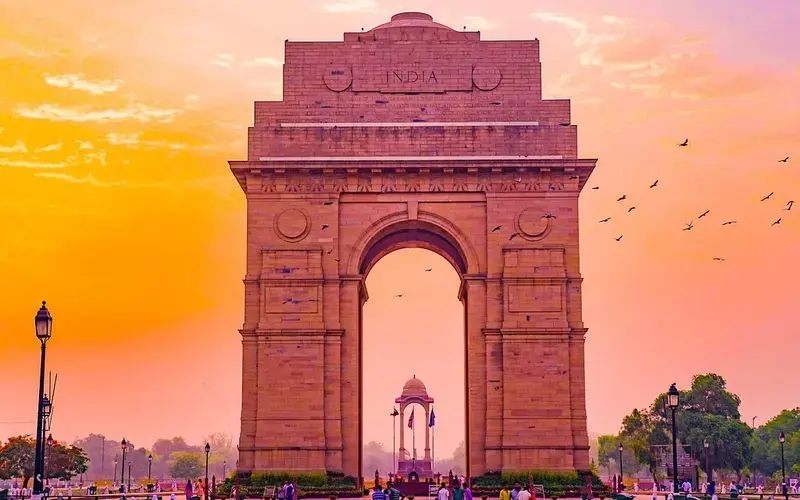
- India Gate: A war memorial commemorating the Indian soldiers who died in World War I.
- Rashtrapati Bhavan: The official residence of the President of India, located at the Western end of Rajpath.
Delhi's history is a testament to its resilience and importance as a political and cultural hub in India. The city seamlessly blends ancient history with modernity, making it a fascinating place to explore.
Union Territory Delhi Facts
Delhi, as the capital city of India, is steeped in history and cultural significance. Here are some intriguing facts about Delhi:
Historical Facts
- Ancient Origins: Delhi has been continuously inhabited since at least the 6th century BCE.
- Seven Cities of Delhi: Over the centuries, Delhi has been built and rebuilt several times. The historical "Seven Cities" include Qila Rai Pithora, Siri, Tughlaqabad, Jahanpanah, Firozabad, Shergarh, and Shahjahanabad.
- Mughal Capital: The Mughal emperor Shah Jahan moved the capital from Agra to Delhi in 1638, constructing the walled city of Shahjahanabad, which is now known as Old Delhi.
Geographical Facts
- Location: Delhi is situated on the banks of the Yamuna River and is bordered by Haryana on three sides and Uttar Pradesh to the east.
- Area: The National Capital Territory (NCT) of Delhi covers an area of approximately 1,484 square kilometers.
Cultural and Social Facts
- Diverse Population: Delhi is a melting pot of cultures, with a diverse population comprising people from all over India and the world.
- Languages: Hindi is the most widely spoken language, but English, Punjabi, and Urdu are also commonly used.
Architectural and Monumental Facts
- World Heritage Sites: Delhi is home to three UNESCO World Heritage Sites – the Qutb Minar, Humayun’s Tomb, and the Red Fort.
- India Gate: This war memorial commemorates the Indian soldiers who died in World War I and the Third Anglo-Afghan War.
- Lotus Temple: A Bahá'í House of Worship, known for its distinctive flower-like shape and serves as a symbol of unity.
Political and Economic Facts
- Capital Status: Delhi has been the capital of India since 1911, after the British moved the capital from Calcutta (now Kolkata).
- Government: Delhi is a Union Territory with a Legislative Assembly. The Chief Minister leads the government, but the Lieutenant Governor represents the central government.
- Economic Hub: Delhi is one of the most significant commercial centers in India, with key industries including information technology, telecommunications, hotels, banking, media, and tourism.
Educational and Scientific Facts
- Top Universities: Delhi is home to several prestigious educational institutions, including the University of Delhi, Jawaharlal Nehru University (JNU), and the Indian Institute of Technology Delhi (IIT Delhi).
- Research Institutes: The city hosts numerous research institutions like the All India Institute of Medical Sciences (AIIMS) and the Indian Agricultural Research Institute (IARI).
Transportation Facts
- Metro System: The Delhi Metro, one of the largest and busiest metro systems in India, has revolutionized public transport in the city.
- Air Connectivity: Indira Gandhi International Airport is one of the busiest airports in India, serving as a major international gateway.
Environmental Facts
- Green Spaces: Despite being a bustling metropolis, Delhi has numerous parks and green spaces, including the Lodi Gardens, Nehru Park, and Deer Park.
- Pollution Issues: Delhi often struggles with air pollution, particularly in the winter months when smog levels can rise significantly.
Festivals and Events
- Cultural Festivals: Delhi hosts a variety of cultural festivals, such as the Qutub Festival, International Mango Festival, and the Delhi International Arts Festival.
- Religious Festivals: The city celebrates all major Indian festivals with great enthusiasm, including Diwali, Holi, Eid, Christmas, and Guru Nanak Jayanti.
These facts highlight Delhi's historical significance, cultural diversity, and modern advancements, making it a unique and vibrant city.